• ABOUT – DICK YOUNG
  • YWMF – ARCHIVES

Young's World Money Forecast

Since 1978 With a 32 Year Vacation

  • DICK YOUNG
    • FROM RICHARD C. YOUNG
    • THE FINAL INTELLIGENCE REPORT
  • INVESTING STRATEGIES
    • RETIREMENT COMPOUNDERS®
    • GOLD & SILVER
  • DIVIDENDS & COMPOUNDING
    • MIRACLE OF COMPOUNDING
    • DIVIDENDS
  • GRAHAM & RUSSELL
    • BEN GRAHAM
    • RICHARD RUSSELL
  • THE DOW AND THE LEADERS
    • DOW vs. S&P 500
    • DOW vs. DOW DIVIDEND PER SHARE
  • WELLINGTON MANAGEMENT COMPANY
  • YOUR SURVIVAL GUY
  • BANK CREDIT & MONEY
  • THE PRUDENT MAN

Richard C. Young Explains: How to Invest Like Einstein

December 19, 2025 By Richard Young

Originally posted October 23, 2018.

When asked to name the greatest invention in history, Albert Einstein responded, compound interest.

Over three decades ago I started our family investment counsel firm focusing on the miracle of compound interest to help retired and soon to be retired investors just like you.

My short and quick goal was, as it remains today, safety of principal and a consistent flow of income through investors’ long and peaceful retirements.

In J.R.R. Tolkien’s The Hobbit, when the wizard Gandalf asked Bilbo Baggins to take part in an adventure, the Hobbit told Gandalf that he viewed adventures as “… nasty, disturbing, uncomfortable things! Make you late for dinner.”

To meet our mission for family-centric clients, we wrap the Hobbit’s security blanket around Einstein’s concept of compound interest. This duo forms the foundation of our prudent investor platform. And no, we do not advise investing adventures for our clients.

Consistent Cash Flow and Security of Principal

To a one, when clients join us, they know that we, on their behalf, are focused on a consistent flow of cash, security of principal, and the miracle of compound interest. We neither speculate nor market time. We base our sound investments on the Prudent Man Rule, first initiated by Justice Samuel Putnam back in 1830.

The discretely managed portfolios at our investment counsel firm are crafted selecting individual securities for clients one at a time, like rare postage stamps.  As you know from reading my reports, we have moved away from the mutual fund model, especially as regards index funds, products whose time has past.

We craft portfolios by combining dividend-paying blue-chip stocks, each with a long record of increasing dividends annually. Our portfolios also include a substantial mix of blue-chip fixed income, whether corporate or government securities. The majority of portfolios are weighted 60/40 (stocks/bonds) or the inverse.

Our most defensive portfolios are aimed at investors looking to draw 4% (our base target) annually from retirement portfolios with (1) minimum volatility and (2) a high degree of comfort.

If you prefer a personalized approach, give my family-focused investment counsel firm a call (888-456-5444) to discuss today how we might make your investment life a little bit easier, and more productive for you.

At Richard C. Young & Co., Ltd. we all look forward to sharing our retirement (current or future) strategies with you.

Warm regards,

Dick Young

Filed Under: Investing Strategies Tagged With: comp

The Singularity Is Nearer: Ray Kurzweil

December 9, 2025 By Richard Young

Originally posted May 28, 2025.

Ray Kurzweil has been a leading developer of artificial intelligence for 61 years, longer than any other living human. I am reading his most recent book, The Singularity is Nearer: When We Merge with AI. The implications of artificial intelligence are immense, and Kurzweil is viewing the technology from the forefront in his position as Principal Researcher and AI Visionary at Google. The book’s website explains:

The world’s most renowned oracle of technological change shows how human minds will merge with AI within the next two decades and what this momentous transformation will mean for us all.

One of the greatest inventors of our time, futurist Ray Kurzweil published his landmark book The Singularity Is Near in 2005 and dozens of his predictions about technological advancements have come true—with concepts like AI, intelligent machines, and biotechnology now widely familiar to the public.

In this visionary and fundamentally optimistic new book, Kurzweil brings a fresh perspective to advances toward the Singularity. Kurzweil predicts that by the end of this decade, AI will exceed human levels of intelligence and by 2045, we’ll be able to enhance our intelligence a millionfold, expanding our consciousness in ways we can barely imagine by connecting our brains directly to the cloud. Human life will be changed forever once we live free from the limits of biology—and this eventuality is drawing ever nearer.

Topics touched on by Kurzweil in the book are:

  • Rebuilding the world, atom by atom with devices like nanobots
  • Radical life extension beyond the current age limit of 120
  • Reinventing intelligence by connecting our brains to the cloud
  • How exponential technologies are propelling innovation and improving all aspects of our well-being
  • The growth of renewable energy and 3D printing, which can be applied to everything from clothes to building materials to growing human organs
  • Addressing potential perils of biotechnology, nanotechnology, and artificial intelligence
  • AI’s impact employment and human safety
  • “After Life” technology to reanimate those who have passed away through a combination of data and DNA
  • How this next stage of humanity’s evolution can and will transform life on earth profoundly for the better

Kurzweil discusses his vision of AI in the video below:

Filed Under: Feature

Concentrate on Dividend Record and Compounding

December 8, 2025 By Richard Young

Originally posted March 11, 2020.  There are few histories as crucial to the course of my life as my awakening to the power of compound interest and the importance of dividends. Since my decision to climb on the dividend bandwagon, I have been an evangelist to hundreds of thousands of paid subscribers, and many more investors beyond. My message has been consistent and clear, and I don’t regret focusing on dividends a bit. Here’s how it all started.

Back to Monterey and Woodstock I’ve been developing investment strategies for investors like you before The Association kicked off the 1967 Monterey International Pop Festival with “Along Comes Mary” or Richie Havens opened Woodstock in August 1969. I started soon after John F. Kennedy was shot in Dallas in November 1963, and even before Dr. Martin Luther King, Jr. was shot at the Lorraine Motel in Memphis in April 1968. That’s a long time ago. The ‘60s was of course a seminal decade in American history. Key events, including the difficult investment environment of the ‘60s, seem like yesterday. My 1964 Beginning I’ve put together a display that tracks the Dow Jones Industrial Average through the decades. When I entered the securities business in the summer of 1964 (with Ed Rosenberg, Clayton Securities), I had no way of knowing that during my complete career in the Boston investment community, which ended in 1981, the Dow would end lower than when I began. How would you have liked to have retired in 1964 and faced a 16-year Dow downer? Talk about retirement financial hell. As my display indicates, the decade of the ‘60s provided a sad annual average return (ex-dividends) of only 1.65%. Moreover, the 1970s were set to be even worse. When the curtain came down on this miserable decade, investors had scored an average return of only 0.5% (before dividends). Thankfully for conservative investors today, as has been the case well before the ‘60s and ‘70s, dividends remain the name of the game. Ben Graham’s Powerful Investment Advice After my first reading of Security Analysis by Ben Graham in 1963, it’s still my most powerful investment influence. Ben was Mr. Dividends. I became attached to the concept before I landed at Clayton Securities at 147 Milk St. in Boston’s financial district. As early as 1964, I knew I would concentrate on dividends throughout my investment career.

Filed Under: Dividends & Compounding

Gold’s 50-Year Price Explosion

November 12, 2025 By Richard Young

Originally posted on July 27, 2020.

Part I

I was there from the start.  In early August 1971, I had just joined internationally focused research and trading firm Model Roland & Co.

On 15 August 1971, President Nixon shocked the world by announcing that the U. S. would no longer officially trade dollars for gold. At that time, gold’s fixed price was $35/oz.

By 1980, gold would hit an astronomical $800/oz.

OK then, back to Model and the firm’s wonderful head partner Leo Model. From my first day onboard at Model, I started covering a bevy of major Boston institutional accounts.  I was 30 years old, and I would become friends with analysts, portfolio managers and traders at Wellington Management, Fidelity Investments, First National Bank of Boston, State Street Bank, State Street Research, Endowment Management, Studley Shupert, and Keystone Management through my entire investment career on Federal Street in Boston.

I immediately realized that international trading (including gold shares and arbitrage), as well as monetary strategy and world currencies, was going to be my focus from August 1971 onward.

Five decades later, these subjects remain today my daily focus. I have been a buyer of gold, silver, and Swiss francs for decades, and I have never sold a single one of my positions.

By 1972 I was off to London on a mission for Leo Model. My job was to produce a strategy report for Model, Roland & Co on the international gold shares market. It took eight days in London to meet all the insiders with whom Mr. Model had arranged visits. Except for a single, most unpleasant glitch, (understatement) all went well.

I went on to submit a 25-page strategy report to Mr. Model. Shortly thereafter I was informed that Mr. Model had sent my report along to the firm’s chief monetary guru, one Edward M. Bernstein, one of the architects of the Bretton Woods monetary agreement.

Remember, I was 31 years old, and quite terrified to hear that EMB had been brought into the loop.

On 7 August 1972,  I received the surprise of my young life: EMB wrote  back on his corporate letterhead:

I think the collection of papers on gold is excellent. It seems objective and pointed. I have no suggestions. Put me on the list to get what you put out on gold.

Sincerely,

Edward M. Bernstein

Although I did not know it at the time, a year later, I would no longer be at Model, Roland.

Check back in with richardcyoung.com for my introduction Part II and the kickoff of our industry-leading precious metals, currencies, monetary madness, fed maleficence and dollar destruction weekly update.

Warm regards,

Dick


This slideshow requires JavaScript.

Filed Under: Investing Strategies Tagged With: precious

65 Years of Compounding

November 5, 2025 By Richard Young

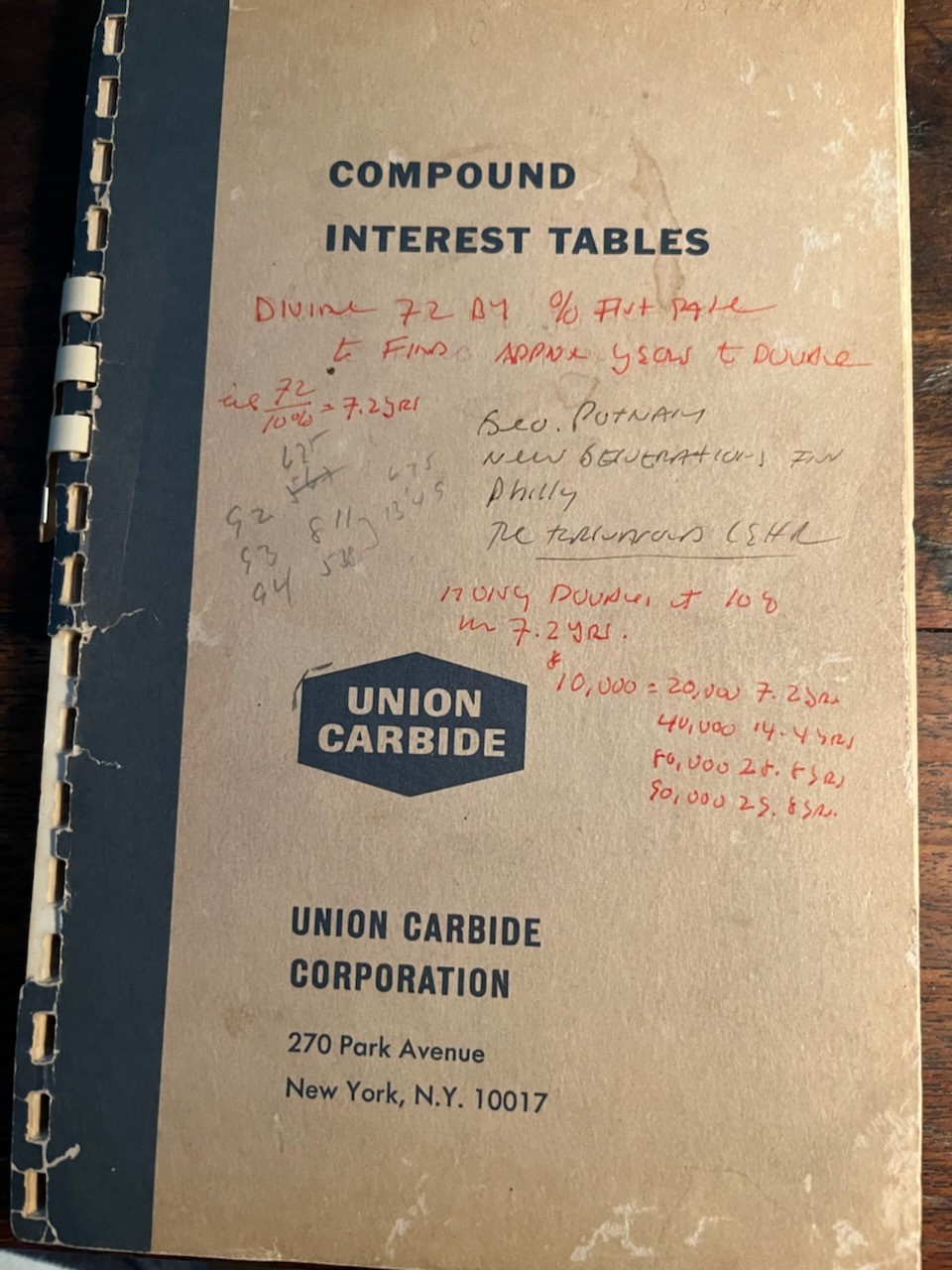
The article below was written about me way back in 1991. Nearly four decades later, I still advise real investors on compound interest, the Prudent Man Rule, and Ben Graham’s Margin of Safety. I do not speculate or invest on stock stories–never have. I invest on simple mathematics. All you need is time and a compound interest table. 

Filed Under: Investing Strategies

Ben Graham: Margin of Safety

November 3, 2025 By Richard Young

By DigitalArt Max @ Adobe Stock

In 2001, I wrote about Ben Graham and his Margin of Safety:

Creating Wealth Through the Power of Compound Growth

Ben Graham, 1894-1976…

Warren Buffett has referred to Benjamin Graham’s The Intelligent Investor as “by far the best book on investing ever written.” John Train, a former super Forbes columnist, wrote, “Graham ranks as this century’s (and perhaps history’s) most important thinker on applied portfolio investment.”

In the preface to Graham’s fourth revised edition printed in 1973, W.B. wrote, “It is rare that the founder of a discipline does not find his work eclipsed in rather short order by successors. But over forty years after publication of the book (first written in 1949) that brought structure and logic to a disorderly and confused activity, it is difficult to think of possible candidates for even the runner-up position in the field of security analysis.”

In preparation for writing to you this month, I reread The Intelligent Investor in order to be able to give you a little of the meat from Ben Graham’s seminal work. I practice these principles myself in my own investing, for my family accounts, and for you. I hope you’ll benefit from my Benjamin Graham menu for the rest of your investing days.

Your Cornerstone
  1. “Diversification is an established tenet of conservative investment. By accepting it so universally, investors are really demonstrating their acceptance of the margin-of-safety principle, to which diversification is the companion.”
  2. “The ‘aggressive’ investor should start from the same base as the defensive investor, namely, a division of his funds between high-grade bonds and high-grade common stocks bought at reasonable prices.”
  3. “To enjoy a reasonable chance for continued better than average results, the investor must follow policies which are (1) inherently sound and promising, and (2) not popular in Wall Street.”
  4. “One of the most persuasive tests of high quality is an uninterrupted record of dividend payments going back over many years. We think that a record of continuous dividend payments for the last 20 years or more is an important plus factor in the company’s quality rating. Indeed the defensive investor might be justified in limiting his purchases to those meeting this test.”
  5. “Stock trading is not an operation which, on thorough analysis, offers safety of principal and a satisfactory return.”
  6. “Outright speculation is neither illegal, immoral, nor (for most people) fattening to the pocketbook.”
  7. “In an astonishingly large proportion of the trading in common stocks, those engaged therein don’t appear to know–in polite terms–one part of their anatomy from another.”

These words remain as true today as they were then.

Filed Under: Ben Graham

My Top 10 Fund Investments

October 24, 2025 By Richard Young

Dick Young

My top fund investments include three fixed income-centric funds, two gold funds, two dividend-centric equity funds, two inflation hedge energy funds, and one dividend-centric consumer equity fund for a total of ten major positions in all.

My fund volatility in the normal year approaches zero. 100% of my investing is based on the Prudent Man Rule and Ben Graham’s Margin of Safety. I do not speculate with the money I have worked a lifetime to earn, and I never have. I have never taken what most investors refer to as a significant loss. In fact, I can rightfully be referred to as a pretty boring investor.

Filed Under: Investing Strategies

The Establishment of the Prudent Man Rule

October 21, 2025 By Richard Young

Justice Samuel Putnam wrote the decision in Harvard College vs. Amory. Samuel Putnam. Image from page 56 of “History of Essex County, Massachusetts: with biographical sketches of many of its pioneers and prominent men” (1888)

The Prudent Man Rule is based on common law stemming from the 1830 Massachusetts court formulation Harvard College v. Amory. The Prudent Man Rule directs trustees “to observe how men of prudence, discretion and intelligence manage their own affairs, not in regard to speculation, but in regard to the permanent disposition of their funds, considering the probable income, as well as the probable safety of the capital invested.”

Since I started our family investment management firm in 1989, I have operated under the assumption that the Prudent Man Rule to this day carries as much weight as it did in 1830. Common sense and prudence just don’t go out of style—ever.

Filed Under: Investing Strategies

Bessent: The Fed Must Change Course, but No Mention of Gold

September 8, 2025 By Richard Young

Secretary of the Treasury Scott Bessent looks on as President Donald Trump and President Ferdinand Marcos Jr. of the Philippines participate in a bilateral meeting, Tuesday, July 22, 2025, in the Oval Office. (Official White House Photo by Daniel Torok)

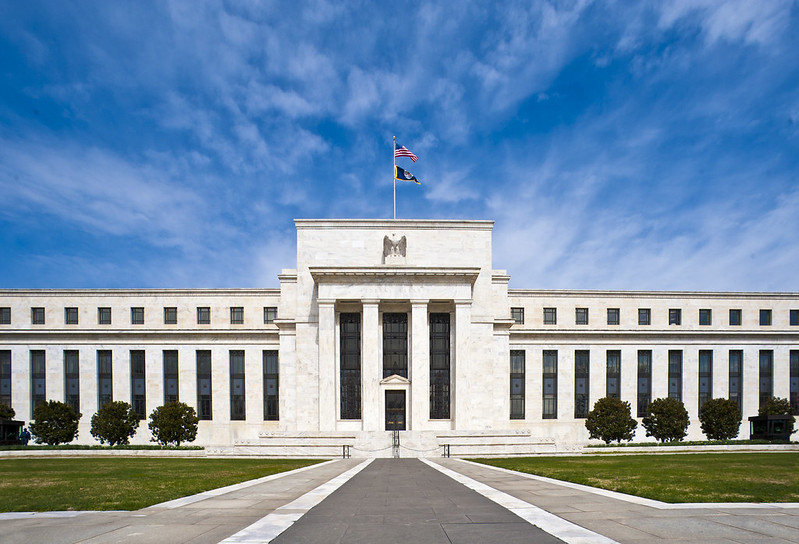
On Friday, Treasury Secretary Scott Bessent explained in an op-ed in The Wall Street Journal the dangers of the expanding responsibilities and power of the Federal Reserve. He noted the Fed’s expanded powers granted in the Dodd-Frank Act, and that fifteen years afterward, the results of granting the central bank those extra powers have been disappointing. He wrote:

Regulatory overreach compounds the problem. The Dodd-Frank Act dramatically enlarged the Fed’s supervisory footprint, transforming it into the dominant regulator of U.S. finance. Fifteen years on, the results are disappointing. The 2023 failure of Silicon Valley Bank illustrates the dangers of combining supervision and monetary policy. The Fed now regulates, lends to and sets the profitability calculus for the banks it oversees, an unavoidable conflict that blurs accountability and jeopardizes independence. A more coherent framework would restore specialization: empowering the Federal Deposit Insurance Corp. and Office of the Comptroller of the Currency to lead bank supervision, while leaving the Fed to macro surveillance, lender-of-last-resort liquidity and monetary policy.

At the heart of independence lies credibility and political legitimacy. Both have been jeopardized by the Fed’s expansion beyond its mandate. Heavy intervention has produced severe distributional outcomes, undermined credibility and threatened independence. Looking ahead, the Fed must scale back the distortions it causes in the economy. Unconventional policies such as quantitative easing should be used only in true emergencies, in coordination with the rest of the federal government. There must also be an honest, independent, nonpartisan review of the entire institution, including monetary policy, regulation, communications, staffing and research.

The U.S. faces short- and medium-term economic challenges, along with the long-term consequences of a central bank that has placed its own independence in jeopardy. The Fed’s independence comes from public trust. The central bank must recommit to maintaining the confidence of the American people. To safeguard its future and the stability of the U.S. economy, the Fed must re-establish its credibility as an independent institution focused solely on its statutory mandate of maximum employment, stable prices and moderate long-term interest rates.

Responding to Bessent’s op-ed in The New York Sun, former economic advisor to President Trump, Larry Kudlow, celebrates the coming “takeover” of the Fed by President Trump’s appointed governors. He writes:

As I have suggested, the economy, both present and future, is stronger than folks may think.

Unsurprisingly, President Trump responded with a brief post on Truth Social, saying, “Jerome ‘Too Late’ Powell should have lowered rates long ago.” Mr. Trump exclaimed: “As usual, he’s ‘Too Late.’”

Hopefully Mr. “Too Late” Powell will get the Fed’s fund target rate down to 3 percent from its current 4.5 percent by the end of this year.

Yet the bigger story is perhaps best summarized in a Wall Street Journal headline, “Trump Is Making Strides In His Takeover of the Fed,” as the Council of Economic Advisers chairman, Stephen Miran, is taking a leave of absence in order to temporarily fill a Fed seat on the central bank’s board of governors.

The New York Sun’s editors further riffed on Kudlow’s response with another editorial on September 7, wondering why Bessent hadn’t mentioned gold, and wondering why the administration hadn’t made more of the issue.

The first thing we did when we saw Mr. Bessent’s column was to scan it for the word “gold.” The monetary metal was unmentioned. That strikes us as odd. On that very day, after all, the value in terms of gold at which greenbacks were trading was about to set a new low of less than a 3,558th of an ounce of the monetary metal. When graphed it’s at the bottom of a decades-long slide. It’s the lowest value in terms of gold ever recorded for the greenback.

We understand that, in the age of fiat money, the legislated value of the dollar is not supposed to matter. In 1971, Nixon closed the gold window at which foreign governments could redeem dollars they held at a 35th of an ounce of gold. In 1973, Congress set the value of the dollar at a 42.22nd of an ounce of gold. Yet Uncle Sam hasn’t enforced that. It is amazing just how loath is our leadership at the Treasury and the Federal Reserve to open up this issue.

What’s so startling about the official silence on the collapse of the dollar is that Mr. Bessent and, above him, President Trump would be — or so it seems to us — a promising pair to take on the issue of fiat money. In the 2016 Republican primaries, moreover, Mr. Trump was widely quoted as saying, per NPR, “Bringing back the gold standard would be very hard to do, but, boy, would it be wonderful. We’d have a standard on which to base our money.”

It doesn’t appear likely that Trump or Bessent will lead a push for a return to the gold standard. The immediate effects of such a move would be counter to the greater priorities Trump has signalled in increasing American manufacturing. If a gold standard were introduced, the value of a dollar would likely soar in comparison to international fiat currencies, and imports could become cheaper relative to American manufactured goods, driving up imports and driving down American manufacturing jobs. Those looking for America to return to the gold standard will likely be waiting for another president.

Filed Under: Gold

Richard Young Reports: 50+ Years with Fidelity and Wellington

August 15, 2025 By Richard Young

I started in the institutional research and trading investment business at Model Roland & Co. on Federal St. in Boston in August 1971. Just up the street from Model were Fidelity Investments, and Wellington Management, both of whom I called on from my very first hours on the job.

Over five decades ago, Ned Johnson, aka “Mister Johnson,” ran the show at Fidelity. At Wellington, Jack Bogle, “Mr. Mutual Fund,” had not yet left Wellington to start Vanguard.   

My focus in the initial going was international research and trading, and remains so today all these decades later.  I still consider Fidelity and Wellington the industry leaders.

Both firms feature great cultures, industry-leading technology, well-rounded investment programs for individuals, families, and small businesses–the type of folk I hoped to be associated with throughout my investment career.     

Not a business day goes by that one of my associated companies is not involved with one or more of Fidelity or Wellington’s services.

I never would have expected, as I started out in August 1971, that I would be working with Fidelity and Wellington for over 50 years.

In Wellington’s case it, to this day, manages hundreds of billions of dollars in blue-chip, “prudent man rule” quality investment mutual funds. 

In the early ’90s, Wellington’s chief investor relations officer informed me that I directed more mutual fund assets Wellington’s way in a given year than did the rest of the combined American investment newsletter industry.

And now in 2025, with our little family investment management company requiring a cutting-edge custodian for our $1.8 billion-dollar conservative Boston-style management company we, not surprisingly, rely on Fidelity. 

Your Survival Guy, hard to believe, joined my family business over two decades ago. But before that, he was at Fidelity which he too recalls as being run like a family business. He writes:

When I joined the family business [Fidelity], I was Fidelity employee number twenty-something-thousand. I helped customers/participants of Fortune 500 companies manage their money in this fairly new savings vehicle known by its IRS code: 401(k). It turned out to be a thing. I’ll always remember how CEO Ned Johnson III ran the firm like the family business that it was.

In memos to employees, Mr. Johnson wrote to you as if you were seated around him at the dinner table. Business first, then, after some red wine and dessert (and maybe a piece of dark chocolate for digestion; because he was into taking care of one’s health) he’d leave you with something to think about—like his favored Japanese philosophy Kaizen, meaning constant improvement. Reading his memo in my little cubicle, not at his dinner table, I truly believed that through small steps—like compound interest—I could become the best version of myself. Then it was back to stuffing checks into envelopes.

We need to be reminded of this in times like these. Because when a video game company you typically see at the Mall can stop the market in its tracks, you need to figure out if you’re doing everything you can to protect your money. Are you with an investment company that treats you like a family member? Take a look at the brokerage firms selling their clients’ (I hope not yours) trading patterns to their other customers—these are household names that may (or may not) surprise you. Pay attention.

Action Line: Get your money with a firm that treats you like family. Too many investment firms are profiting from you, for example, with your information without you even knowing it. And don’t get me started on how they use your cash to lend out to others and pocket the profit.

P.S. Read more about how I got my start at Model Roland & Co. back in 1971, and gold’s 50-year price explosion.

Originally posted February 23, 2021.

Filed Under: Investing Strategies

  • 1
  • 2
  • 3
  • …
  • 28
  • Next Page »

Compensation was paid to utilize rankings. Click here to read full disclosure.

RSS New From Young Research & Publishing

  • Merry Christmas
  • Big State Tax Changes Coming in 2026
  • US GDP Accelerates to 4.3% Growth in Third Quarter of 2025
  • Copper Hits Record High Above $12,000 on Supply Disruptions and Tariff Fears
  • India Expands Maritime Power but Faces Limits Against China’s Navy
  • Private Credit: Is This What “Democracy” Looks Like?
  • US Pauses Offshore Wind Leases Over National Security Concerns
  • Japan Introduces Public Funding to Revive Nuclear Sector
  • Gas and Nuclear Plant Owners Benefit from New FERC Order
  • America Can Cut the Red Tape Holding Back Business

RSS New From Your Survival Guy

  • Very Ralph and Paris
  • Remembering Ronald Read
  • Private Credit: Is This What “Democracy” Looks Like?
  • Private Funds: Sunshine Is the Best Disinfectant
  • America Can Cut the Red Tape Holding Back Business
  • “I’ve Owned Gold Coins Since 1971”
  • Your Survival Guy’s RAGE Gauge: Need an Intervention?
  • Gold a Symptom of Discontent
  • The Partisan Gap Driving Sentiment
  • Make It a Good Month

Search Our Site

Richard C. Young & Co., Ltd.

–Client Letter Sign Up–

Sign up to receive email alerts when our latest client letter is posted on our website.

Disclaimer:

The information contained here is for informational and educational purposes only. It is not intended nor should it be considered investment advice or a recommendation of securities. Past performance is not a guarantee of future results. It is possible to lose money by investing. You should carefully consider your investment objectives and risk tolerance before investing.

Copyright © 2025 · About Dick Young · Terms & Conditions


Loading Comments...