• ABOUT – DICK YOUNG
  • YWMF – ARCHIVES

Young's World Money Forecast

Since 1978 With a 32 Year Vacation

  • DICK YOUNG
    • FROM RICHARD C. YOUNG
    • THE FINAL INTELLIGENCE REPORT
  • INVESTING STRATEGIES
    • RETIREMENT COMPOUNDERS®
    • GOLD & SILVER
  • DIVIDENDS & COMPOUNDING
    • MIRACLE OF COMPOUNDING
    • DIVIDENDS
  • GRAHAM & RUSSELL
    • BEN GRAHAM
    • RICHARD RUSSELL
  • THE DOW AND THE LEADERS
    • DOW vs. S&P 500
    • DOW vs. DOW DIVIDEND PER SHARE
  • WELLINGTON MANAGEMENT COMPANY
  • YOUR SURVIVAL GUY
  • BANK CREDIT & MONEY
  • THE PRUDENT MAN

Gold’s 50-Year Price Explosion

January 30, 2026 By Richard Young

Originally posted on July 27, 2020.

Part I

I was there from the start.  In early August 1971, I had just joined internationally focused research and trading firm Model Roland & Co.

On 15 August 1971, President Nixon shocked the world by announcing that the U. S. would no longer officially trade dollars for gold. At that time, gold’s fixed price was $35/oz.

By 1980, gold would hit an astronomical $800/oz.

OK then, back to Model and the firm’s wonderful head partner Leo Model. From my first day onboard at Model, I started covering a bevy of major Boston institutional accounts.  I was 30 years old, and I would become friends with analysts, portfolio managers and traders at Wellington Management, Fidelity Investments, First National Bank of Boston, State Street Bank, State Street Research, Endowment Management, Studley Shupert, and Keystone Management through my entire investment career on Federal Street in Boston.

I immediately realized that international trading (including gold shares and arbitrage), as well as monetary strategy and world currencies, was going to be my focus from August 1971 onward.

Five decades later, these subjects remain today my daily focus. I have been a buyer of gold, silver, and Swiss francs for decades, and I have never sold a single one of my positions.

By 1972 I was off to London on a mission for Leo Model. My job was to produce a strategy report for Model, Roland & Co on the international gold shares market. It took eight days in London to meet all the insiders with whom Mr. Model had arranged visits. Except for a single, most unpleasant glitch, (understatement) all went well.

I went on to submit a 25-page strategy report to Mr. Model. Shortly thereafter I was informed that Mr. Model had sent my report along to the firm’s chief monetary guru, one Edward M. Bernstein, one of the architects of the Bretton Woods monetary agreement.

Remember, I was 31 years old, and quite terrified to hear that EMB had been brought into the loop.

On 7 August 1972,  I received the surprise of my young life: EMB wrote  back on his corporate letterhead:

I think the collection of papers on gold is excellent. It seems objective and pointed. I have no suggestions. Put me on the list to get what you put out on gold.

Sincerely,

Edward M. Bernstein

Although I did not know it at the time, a year later, I would no longer be at Model, Roland.

Check back in with richardcyoung.com for my introduction Part II and the kickoff of our industry-leading precious metals, currencies, monetary madness, fed maleficence and dollar destruction weekly update.

Warm regards,

Dick


This slideshow requires JavaScript.

Filed Under: Investing Strategies Tagged With: precious

Richard C. Young Explains: How to Invest Like Einstein

December 19, 2025 By Richard Young

Originally posted October 23, 2018.

When asked to name the greatest invention in history, Albert Einstein responded, compound interest.

Over three decades ago I started our family investment counsel firm focusing on the miracle of compound interest to help retired and soon to be retired investors just like you.

My short and quick goal was, as it remains today, safety of principal and a consistent flow of income through investors’ long and peaceful retirements.

In J.R.R. Tolkien’s The Hobbit, when the wizard Gandalf asked Bilbo Baggins to take part in an adventure, the Hobbit told Gandalf that he viewed adventures as “… nasty, disturbing, uncomfortable things! Make you late for dinner.”

To meet our mission for family-centric clients, we wrap the Hobbit’s security blanket around Einstein’s concept of compound interest. This duo forms the foundation of our prudent investor platform. And no, we do not advise investing adventures for our clients.

Consistent Cash Flow and Security of Principal

To a one, when clients join us, they know that we, on their behalf, are focused on a consistent flow of cash, security of principal, and the miracle of compound interest. We neither speculate nor market time. We base our sound investments on the Prudent Man Rule, first initiated by Justice Samuel Putnam back in 1830.

The discretely managed portfolios at our investment counsel firm are crafted selecting individual securities for clients one at a time, like rare postage stamps.  As you know from reading my reports, we have moved away from the mutual fund model, especially as regards index funds, products whose time has past.

We craft portfolios by combining dividend-paying blue-chip stocks, each with a long record of increasing dividends annually. Our portfolios also include a substantial mix of blue-chip fixed income, whether corporate or government securities. The majority of portfolios are weighted 60/40 (stocks/bonds) or the inverse.

Our most defensive portfolios are aimed at investors looking to draw 4% (our base target) annually from retirement portfolios with (1) minimum volatility and (2) a high degree of comfort.

If you prefer a personalized approach, give my family-focused investment counsel firm a call (888-456-5444) to discuss today how we might make your investment life a little bit easier, and more productive for you.

At Richard C. Young & Co., Ltd. we all look forward to sharing our retirement (current or future) strategies with you.

Warm regards,

Dick Young

Filed Under: Investing Strategies Tagged With: comp

65 Years of Compounding

November 5, 2025 By Richard Young

The article below was written about me way back in 1991. Nearly four decades later, I still advise real investors on compound interest, the Prudent Man Rule, and Ben Graham’s Margin of Safety. I do not speculate or invest on stock stories–never have. I invest on simple mathematics. All you need is time and a compound interest table. 

Filed Under: Investing Strategies

My Top 10 Fund Investments

October 24, 2025 By Richard Young

Dick Young

My top fund investments include three fixed income-centric funds, two gold funds, two dividend-centric equity funds, two inflation hedge energy funds, and one dividend-centric consumer equity fund for a total of ten major positions in all.

My fund volatility in the normal year approaches zero. 100% of my investing is based on the Prudent Man Rule and Ben Graham’s Margin of Safety. I do not speculate with the money I have worked a lifetime to earn, and I never have. I have never taken what most investors refer to as a significant loss. In fact, I can rightfully be referred to as a pretty boring investor.

Filed Under: Investing Strategies

The Establishment of the Prudent Man Rule

October 21, 2025 By Richard Young

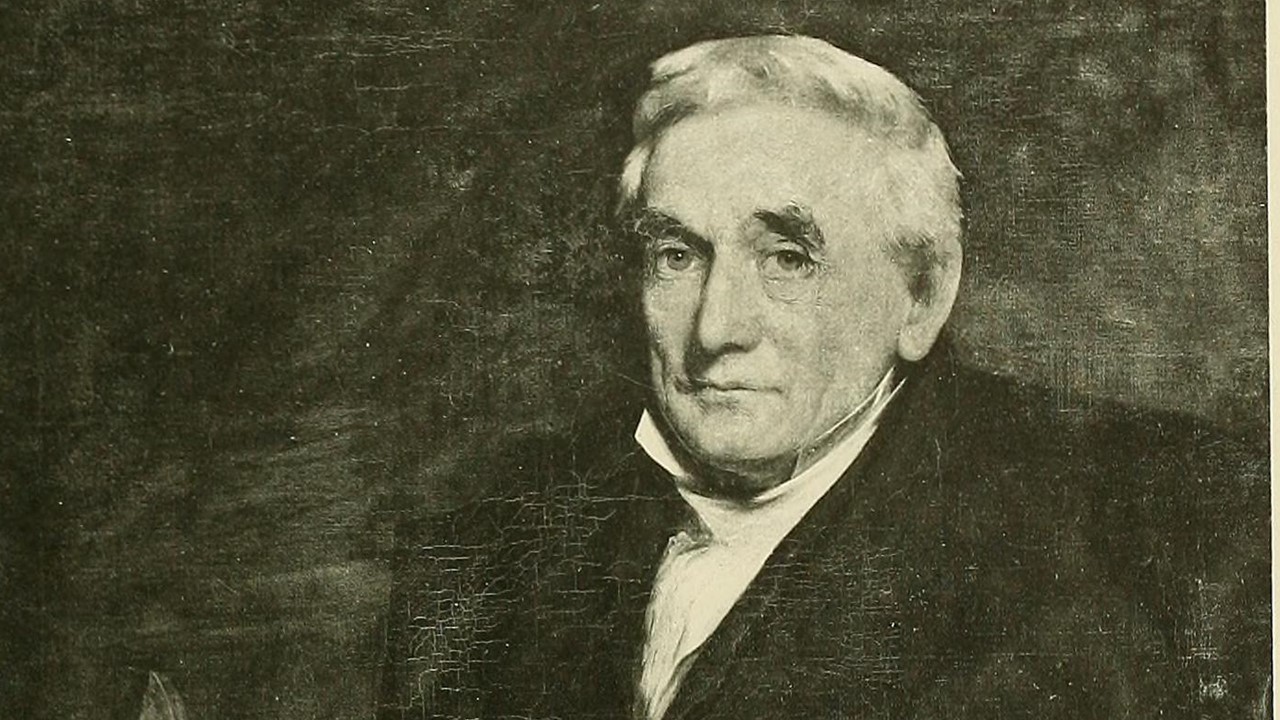
Justice Samuel Putnam wrote the decision in Harvard College vs. Amory. Samuel Putnam. Image from page 56 of “History of Essex County, Massachusetts: with biographical sketches of many of its pioneers and prominent men” (1888)

The Prudent Man Rule is based on common law stemming from the 1830 Massachusetts court formulation Harvard College v. Amory. The Prudent Man Rule directs trustees “to observe how men of prudence, discretion and intelligence manage their own affairs, not in regard to speculation, but in regard to the permanent disposition of their funds, considering the probable income, as well as the probable safety of the capital invested.”

Since I started our family investment management firm in 1989, I have operated under the assumption that the Prudent Man Rule to this day carries as much weight as it did in 1830. Common sense and prudence just don’t go out of style—ever.

Filed Under: Investing Strategies

Richard Young Reports: 50+ Years with Fidelity and Wellington

August 15, 2025 By Richard Young

I started in the institutional research and trading investment business at Model Roland & Co. on Federal St. in Boston in August 1971. Just up the street from Model were Fidelity Investments, and Wellington Management, both of whom I called on from my very first hours on the job.

Over five decades ago, Ned Johnson, aka “Mister Johnson,” ran the show at Fidelity. At Wellington, Jack Bogle, “Mr. Mutual Fund,” had not yet left Wellington to start Vanguard.   

My focus in the initial going was international research and trading, and remains so today all these decades later.  I still consider Fidelity and Wellington the industry leaders.

Both firms feature great cultures, industry-leading technology, well-rounded investment programs for individuals, families, and small businesses–the type of folk I hoped to be associated with throughout my investment career.     

Not a business day goes by that one of my associated companies is not involved with one or more of Fidelity or Wellington’s services.

I never would have expected, as I started out in August 1971, that I would be working with Fidelity and Wellington for over 50 years.

In Wellington’s case it, to this day, manages hundreds of billions of dollars in blue-chip, “prudent man rule” quality investment mutual funds. 

In the early ’90s, Wellington’s chief investor relations officer informed me that I directed more mutual fund assets Wellington’s way in a given year than did the rest of the combined American investment newsletter industry.

And now in 2025, with our little family investment management company requiring a cutting-edge custodian for our $1.8 billion-dollar conservative Boston-style management company we, not surprisingly, rely on Fidelity. 

Your Survival Guy, hard to believe, joined my family business over two decades ago. But before that, he was at Fidelity which he too recalls as being run like a family business. He writes:

When I joined the family business [Fidelity], I was Fidelity employee number twenty-something-thousand. I helped customers/participants of Fortune 500 companies manage their money in this fairly new savings vehicle known by its IRS code: 401(k). It turned out to be a thing. I’ll always remember how CEO Ned Johnson III ran the firm like the family business that it was.

In memos to employees, Mr. Johnson wrote to you as if you were seated around him at the dinner table. Business first, then, after some red wine and dessert (and maybe a piece of dark chocolate for digestion; because he was into taking care of one’s health) he’d leave you with something to think about—like his favored Japanese philosophy Kaizen, meaning constant improvement. Reading his memo in my little cubicle, not at his dinner table, I truly believed that through small steps—like compound interest—I could become the best version of myself. Then it was back to stuffing checks into envelopes.

We need to be reminded of this in times like these. Because when a video game company you typically see at the Mall can stop the market in its tracks, you need to figure out if you’re doing everything you can to protect your money. Are you with an investment company that treats you like a family member? Take a look at the brokerage firms selling their clients’ (I hope not yours) trading patterns to their other customers—these are household names that may (or may not) surprise you. Pay attention.

Action Line: Get your money with a firm that treats you like family. Too many investment firms are profiting from you, for example, with your information without you even knowing it. And don’t get me started on how they use your cash to lend out to others and pocket the profit.

P.S. Read more about how I got my start at Model Roland & Co. back in 1971, and gold’s 50-year price explosion.

Originally posted February 23, 2021.

Filed Under: Investing Strategies

Over Three Decades of Consistency

January 6, 2025 By Richard Young

Riding the yield curve and compounding decades of dividends. Practicing the faith of Ben Graham’s margin of safety, and honoring the Prudent Man Rule. I still write daily. You’ll find me on our family websites, so don’t miss out.

  • www.youngsworldmoneyforecast.com
  • www.youngresearch.com
  • www.richardcyoung.com
  • www.yoursurvivalguy.com

Filed Under: Investing Strategies

The Story of Roger Babson and the Great Depression

November 30, 2024 By Richard Young

Roger Babson, entrepreneur und business theorist from Massachusetts, between 1905 and 1945. Photo by Harris & Ewing, courtesy of the Library of Congress.

After successfully predicting the crash that led to the Great Depression, Roger Babson was vilified as though he were its cause. At Doug Casey’s International Man, Jeff Thomas explains the history of Roger Babson, founder of Babson College, which I attended.

“[A] crash is coming, and it may be terrific. …. The vicious circle will get in full swing and the result will be a serious business depression. There may be a stampede for selling which will exceed anything that the Stock Exchange has ever witnessed. Wise are those investors who now get out of debt.”

The above words could easily have been stated by me or another of the (very) few others who currently predict the coming of crashes in the markets.

But they were not. The statements above were made by investor Roger Babson at a speech at the Annual Business Conference in Massachusetts on 5th September, 1929.

Mr. Babson’s prediction was not a sudden one. In fact, he had been making the same prediction for the previous two years, although he, in September of 1929, felt the crash was much closer.

News of his speech reached Wall Street by mid-afternoon, causing the market to retreat about 3%. The sudden decline was named the “Babson Break.”

The reaction from business insiders was immediate. Rather than respond by saying, “Thanks for the warning—we’ll proceed cautiously,” Wall Street vilified him. The Chicago Tribune published numerous rebuffs from a host of economists and Wall Street leaders. Even Mr. Babson’s patriotism was taken into question for making so rash a projection. Noted economist Professor Irving Fisher stated emphatically, “There may be a recession in stock prices, but not anything in the nature of a crash.” He and many others repeatedly soothed investors, advising them that a resumption in the boom was imminent. Financier Bernard Baruch famously cabled Winston Churchill, “Financial storm definitely passed.” Even President Herbert Hoover assured Americans that the market was sound.

But, 55 days after Mr. Babson’s speech, on 29th October, 1929, the market suddenly went into a free-fall, dropping 12% in its first day.

Today, most people have the general impression that on Black Friday, the market crashed and almost immediately, there were breadlines. Not so. In the Great Depression, as in any depression, the market collapsed in stages. The market did not reach its bottom of 89% losses until July of 1932.

Along the way, thousands of banks and lending institutions went belly-up. Thirteen million jobs disappeared.

And of course, the political leaders of the day did their bit. They implemented knee-jerk “solutions” that actually worsened the situation. Restrictive tariffs, gold confiscation, and a more dominant government were employed, just as they will be this time around.

So, as the market tumbled, we would imagine that Babson came to be praised by Wall Street for his insight, but in fact, the opposite occurred. Having accused him of being utterly incorrect in September, they later accused him of having caused the depression.

So, was Babson’s prediction a lucky guess? Did he simply observe the bull market and arbitrarily predict the opposite of the trend of the day to see what would happen? Not at all.

Such predictions are not guesswork, nor are they attributable to a vision seen in some crystal ball. Such crashes are entirely predictable. When any major bull market becomes overbought; when too many investors begin buying on margin because they can’t come up with the purchase price for stocks; when they then become even more obsessive and borrow money to buy on margin, the market has become a house of cards, waiting for the slightest breeze to come along.

Read more here.

Filed Under: Investing Strategies

MY PAYDAY INDICATOR: Are You Getting Paid to Invest?

October 14, 2024 By Richard Young

By zobaair @ Adobe Stock


UPDATE 10.14.24: In September, the Federal Reserve did cut rates by 50bps and signaled another 50bps in cuts by the end of 2024. I’ve updated my Payday Indicator chart below so you can see the diminishing yield investors can expect on their money. 

Originally posted August 2, 2024.

The market believes the Federal Reserve is poised to cut rates in September and that the Fed could cut them by 75 basis points by the end of the year. Of course, this analysis comes after the market completely misjudged the Fed’s intentions about cuts in December 2023. So, take all predictions with more than a grain of salt. But comments from Jerome Powell and other Fed officials indicate they may be more seriously considering cuts now than last year. 

Long-time readers will remember my Payday Indicator, an indicator based on stock and bond yields that gives an approximation of the yield on a balanced portfolio. I have used this basic calculation as my guide since I graduated from Shaker Heights High School, listening to Chuck Berry in the late ’50s. I’ve watched this number for over six and half decades, and for most of the last two, investors weren’t getting paid nearly enough. Historically low Federal Reserve rates sapped the yield investors could expect to earn on their money. Only since 2022 has my indicator returned to something remotely normal, though nowhere near what it was in the 80s or even the early 90s. 


For now, you’re still getting paid to invest, but with the Fed poised to potentially cut rates, that may not last for long. Act accordingly. Click here to find your port in a storm and sign up for my email alert. 

Filed Under: Investing Strategies

What the Iran Situation Means for Gold

August 22, 2024 By Richard Young

UPDATE 8.22.24: Tensions are once again high in the Middle East, with a war between Israel and Hamas underway and the prospect of Iran and its allies taking a more active role against Israel. Iran has promised strikes against Israel in retaliation for Israel’s killing of Ismail Haniyeh, a top Hamas official, on Iranian soil. Rather than strike back right away, Iranian leaders suggest strikes will come at a time of their choosing. With the Middle East ready to boil over and many other parts of the globe in turmoil, is it any wonder gold is hitting all-time highs? Take a look at my chart below.

Geopolitical fear is only one component of gold’s rise. As you can see in the chart below, inflation is also playing a role. Despite gold reaching new highs in nominal terms, in real terms, gold’s price is elevated, but nowhere near its all-time highs of the 1980s.

Originally posted on January 9, 2020.

Since the end of 2019, gold prices have been on a breakout trajectory. Now, in response to rising tensions with Iran, things are getting very interesting.

The news that the United States had bombed Iranian Major General Qassem Soleimani increased the perception of risk in the Middle East and drove the price of gold even higher.

I have always suggested to investors that they maintain a gold component in their portfolios, not as a road to riches but as an insurance policy against inflation, disaster, and war. Typically, when every other asset’s price is falling, gold’s is rising.

Here’s how I explained it back in 1986:

Throughout history gold has been the money of last resort. Every central bank in the industrialized world holds gold as an international reserve asset. Countries like Switzerland maintain a high percentage of gold holdings in relation to total money supply.

What is the proper course to take in building a gold cornerstone for investment portfolios? Most individuals look to bullion coins, mining shares, and gold certificates from major banks. I like certificates when an individual has no interest whatsoever in gold and invests in gold strictly as a portfolio tool. Certificates also have appeal for institutional investors. Gold mining shares should not be used as a gold proxy for cornerstone positions.

Gold share mutual funds should be considered in the stock fund section of one’s portfolio, but not in the gold cornerstone section. Shares are subject to political and natural disruptions that invalidate their inclusion as gold cornerstone investments.

Since I wrote those words, a lot has changed in the way Americans can invest in gold. The creation of gold-backed ETFs was probably the most significant development. To learn more about how to invest in gold today, click here.

If you would like to understand how my family-run investment counsel firm uses precious metals to craft counterbalanced portfolios, sign up for Richard C. Young & Co., Ltd’s monthly client letter. The letter is free, even for non-clients. You don’t want to miss it.

Filed Under: Investing Strategies Tagged With: precious

  • 1
  • 2
  • 3
  • …
  • 20
  • Next Page »

Compensation was paid to utilize rankings. Click here to read full disclosure.

RSS New From Young Research & Publishing

  • Are Private Equity and Credit Right for Your 401(k)?
  • Trump Nominates Kevin Warsh as Next Federal Reserve Chairman
  • Reliability Challenges Loom for American Power Grid
  • Winter Storm Fern Reverses New England’s Electricity Flow with Canada
  • Producer Prices Rise 0.5% in December Amid Steady Service Costs
  • Fleeing the Blue Blobs for a Better America
  • White House Report: Eliminating State Income Taxes Could Boost Growth
  • U.S. Trade Deficit Hit $56.8 Billion in November
  • Fed Holds Key Lending Rate
  • High-Tech Tanker Tracking Reveals Global Oil Flows

RSS New From Your Survival Guy

  • Are Private Equity and Credit Right for Your 401(k)?
  • Bidenflation Changed the Retirement Calculation
  • The Fed Holds Steady for Now
  • UPS Continues to Cut Jobs in Amazon Unwind
  • Consumer Confidence Drops to Lowest Since 2014
  • Remembering Ronald Read
  • Bessent: The Table Is Set
  • Gold Breaches $5,000/Ounce
  • The Private Credit Cash Out
  • Japan’s Nuclear Renewal Has Begun

Search Our Site

Richard C. Young & Co., Ltd.

–Client Letter Sign Up–

Sign up to receive email alerts when our latest client letter is posted on our website.

Disclaimer:

The information contained here is for informational and educational purposes only. It is not intended nor should it be considered investment advice or a recommendation of securities. Past performance is not a guarantee of future results. It is possible to lose money by investing. You should carefully consider your investment objectives and risk tolerance before investing.

Copyright © 2026 · About Dick Young · Terms & Conditions


Loading Comments...