Exports of oil and natural gas products have hit their highest levels ever as a result of the war with Iran and the disruption to energy flows out of the Persian Gulf.

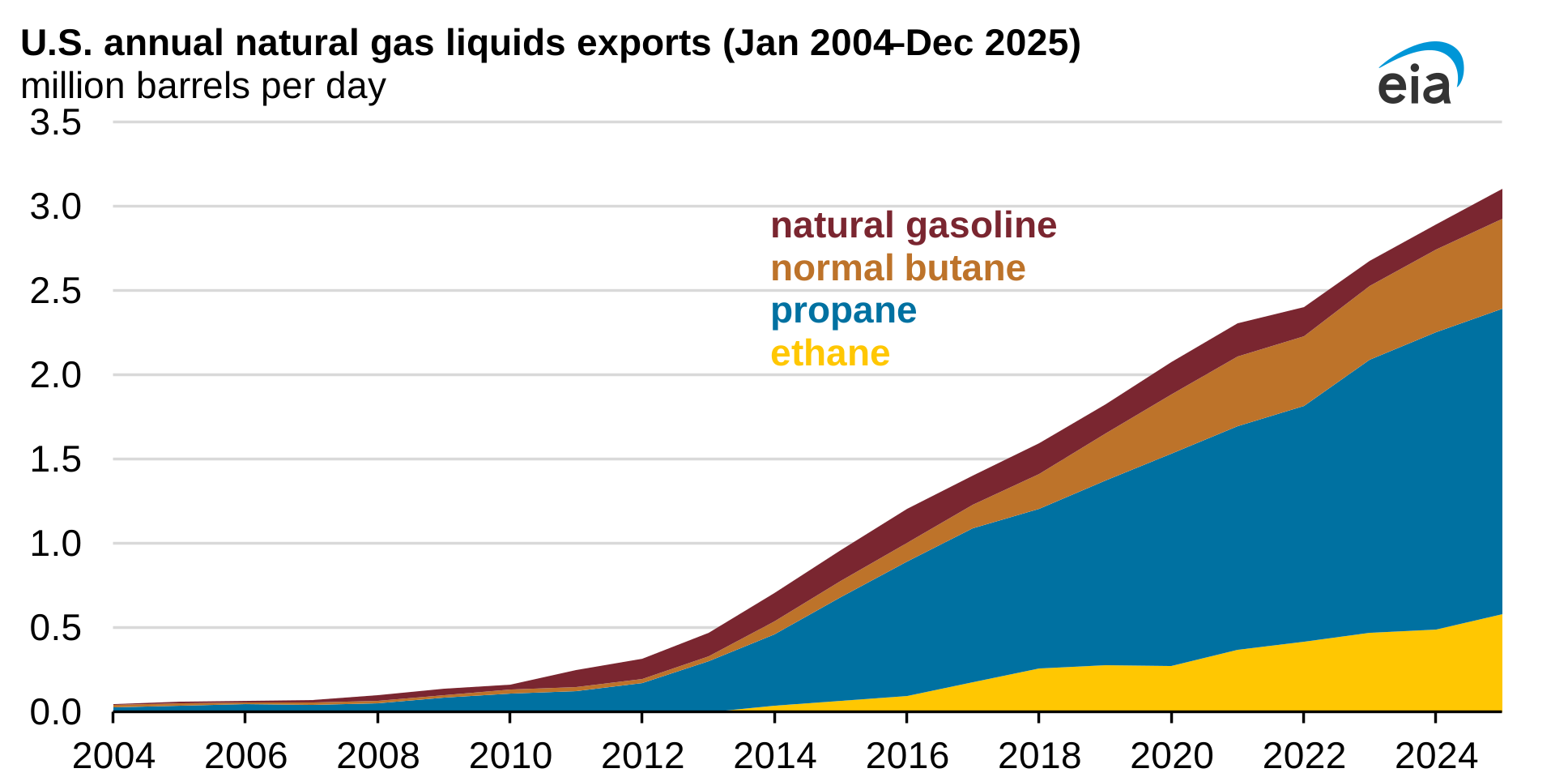
And it’s not just LNG and crude oil that are reaching new highs, other natural gas plant liquids are also being exported at the highest levels ever. The EIA reports:
Data source: U.S. Energy Information Administration, Petroleum Supply Monthly
Natural gas plant liquids (NGPL) exports reached 3.1 million barrels per day (b/d) in 2025, growing 7% from the previous year. These fuels are primarily extracted from the natural gas stream. NGPL plant production has increased every year since 2005, driven by higher production of NGPLs and more global demand for NGPLs, especially as petrochemical feedstocks.
Producers have increasingly targeted liquids-rich supply basins in recent years. Higher production of NGPLs has led to lower prices in the United States relative to global benchmarks in East Asia and the Middle East, increasing global demand for U.S. NGPLs, particularly ethane, propane, and butane.
NGPL exports grew by 212,000 b/d last year with a 70,000 b/d (101%) increase in exports to India. Most NGPLs are waterborne exports. In 2025, the top five destination countries for exports of U.S. NGPLs were China, Japan, Canada, Mexico, and South Korea.
Data source: U.S. Energy Information Administration, Petroleum Supply Monthly
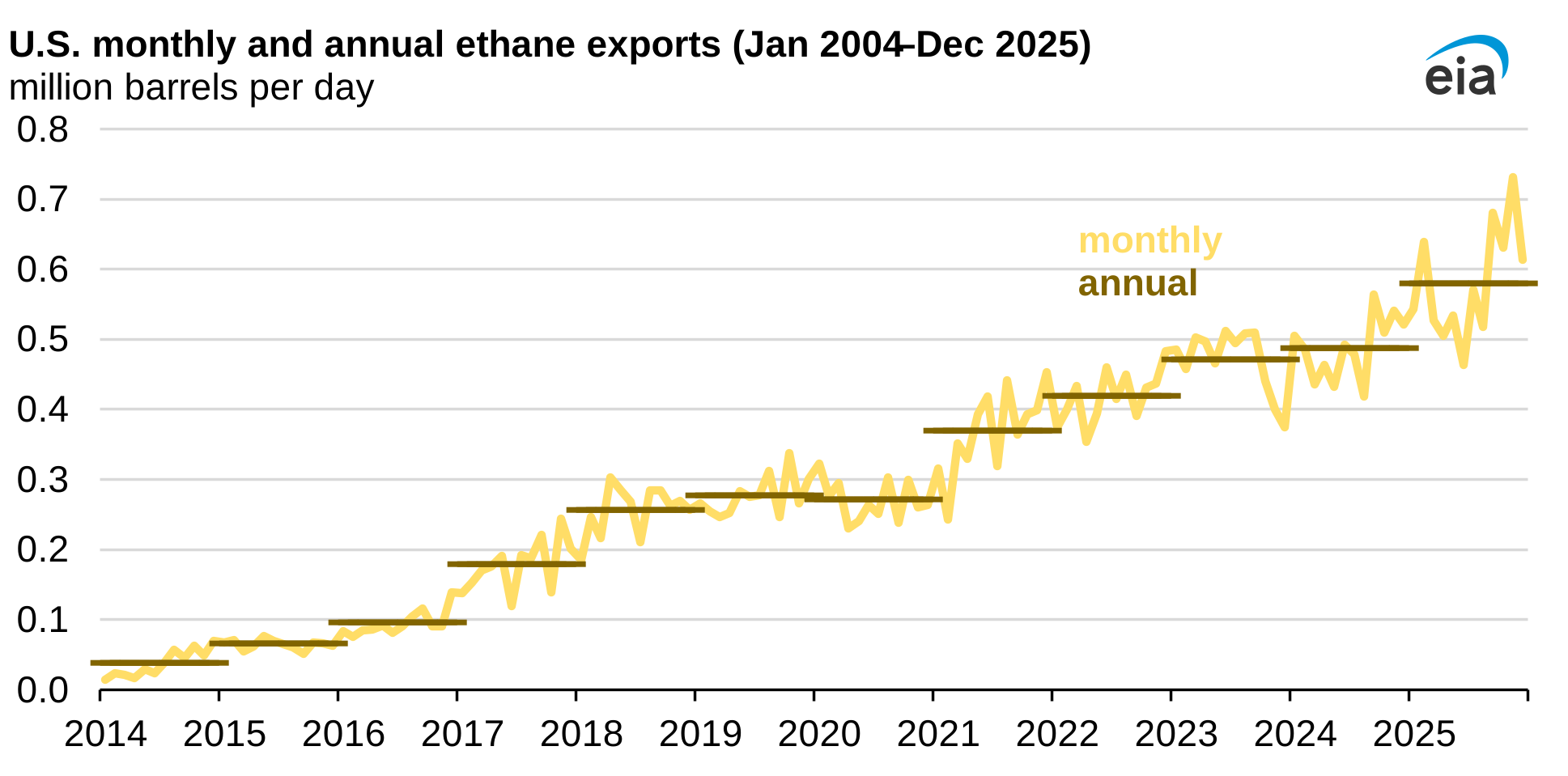
Ethane exports grew by 92,000 b/d (19%) in 2025, mostly from demand created by two newly completed projects: the Coatzacoalcos ethane cracker expansion project completed in May 2025 in Mexico and a new Yantai 2 ethane cracker in China completed around March 2025. Ethane is used primarily in petrochemical production of plastics by cracking ethane into ethylene, a base feedstock for petrochemicals. The United States is one of the only countries capable of exporting waterborne ethane, apart from Norway, which exports small amounts around Northwest Europe.
In 2025, the United States exported a total of 579,000 b/d of ethane to nine countries. A little more than 50% of U.S. ethane exports went to China, with the second-highest volume going to Canada by pipeline and the third-highest volume going to India by tanker. We expect U.S. ethane exports to grow in 2026 with the completion of the INEOS Project One cracker in Antwerp, Belgium, which is slated to come online in the third quarter of 2026 with a capacity of about 80,000 b/d of ethane. This cracker will be the largest in Europe and one of the largest in the world.
Data source: U.S. Energy Information Administration, Petroleum Supply Monthly
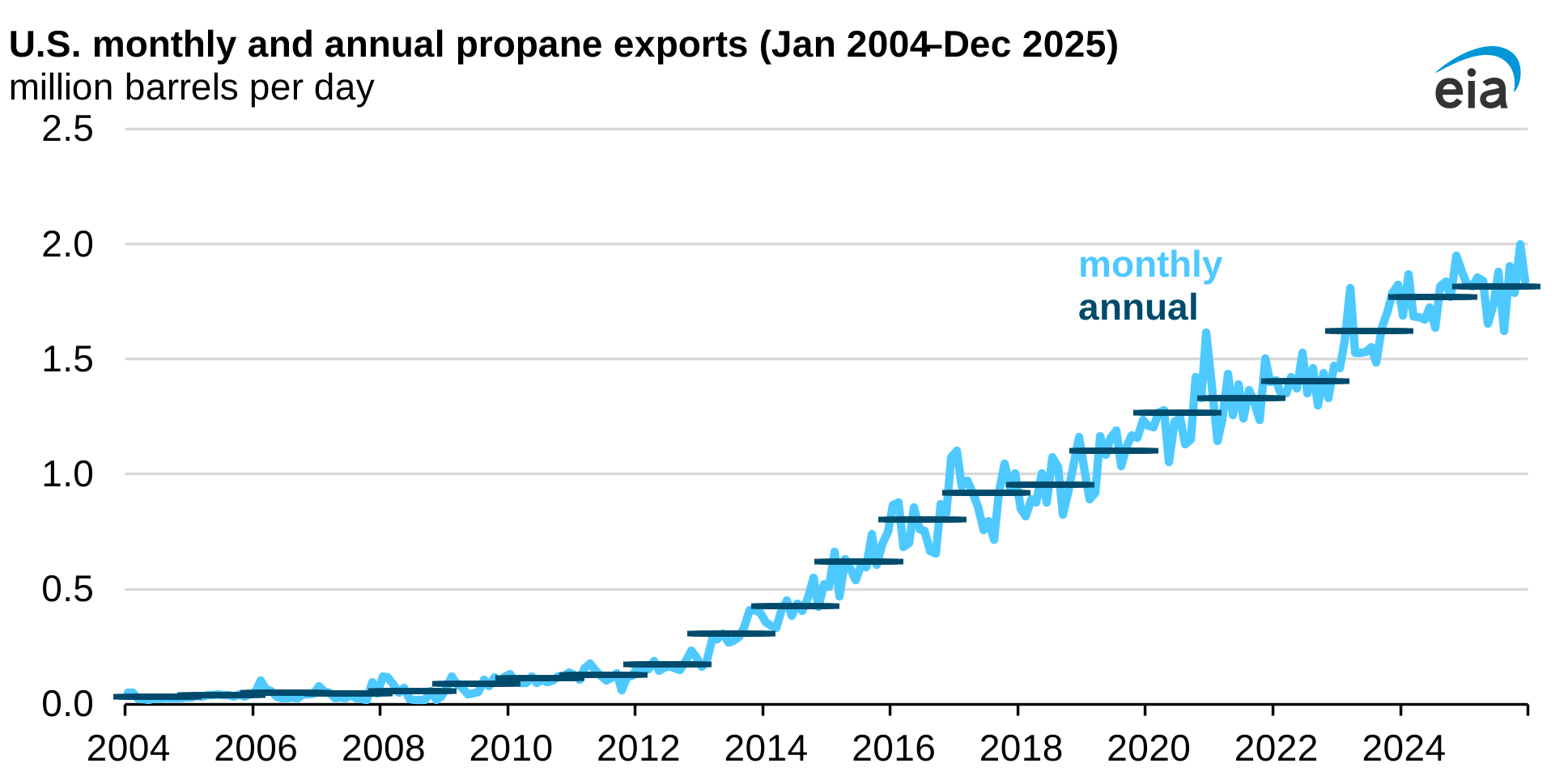
U.S. propane exports averaged a record 1.8 million barrels per day (b/d) in 2025, the most since we began collecting this data in 1973. U.S. propane exports rose just 3% compared with the previous year. Propane is consumed globally for space heating, and it’s increasingly used as a petrochemical feedstock, especially in Asia, among other uses. Three of the top five destinations for U.S. propane exports are in Asia, including China, Japan, and Korea.
Despite the overall increase, the top three importing countries from Asia of U.S. propane decreased or had no change year over year. U.S. exports to South Korea decreased 20% and volumes to Japan remained unchanged compared with the previous year. The largest importer of U.S. propane in the world, China, reduced U.S. propane receipts by 29% because of reciprocal tariffs on imported propane from the United States at the end of the year. Decreases in U.S. propane exports to those countries were more than offset by increases in exports to other Asian countries, especially India, which increased from 2,000 b/d in 2024 to 41,000 b/d in 2025. Exports to other countries in Asia such as Vietnam, Singapore, and Indonesia increased by a combined 70,000 b/d. Increases in Europe, Latin America, and Africa also contributed to the cumulative increase in U.S. propane exports.
Data source: U.S. Energy Information Administration, Petroleum Supply Monthly
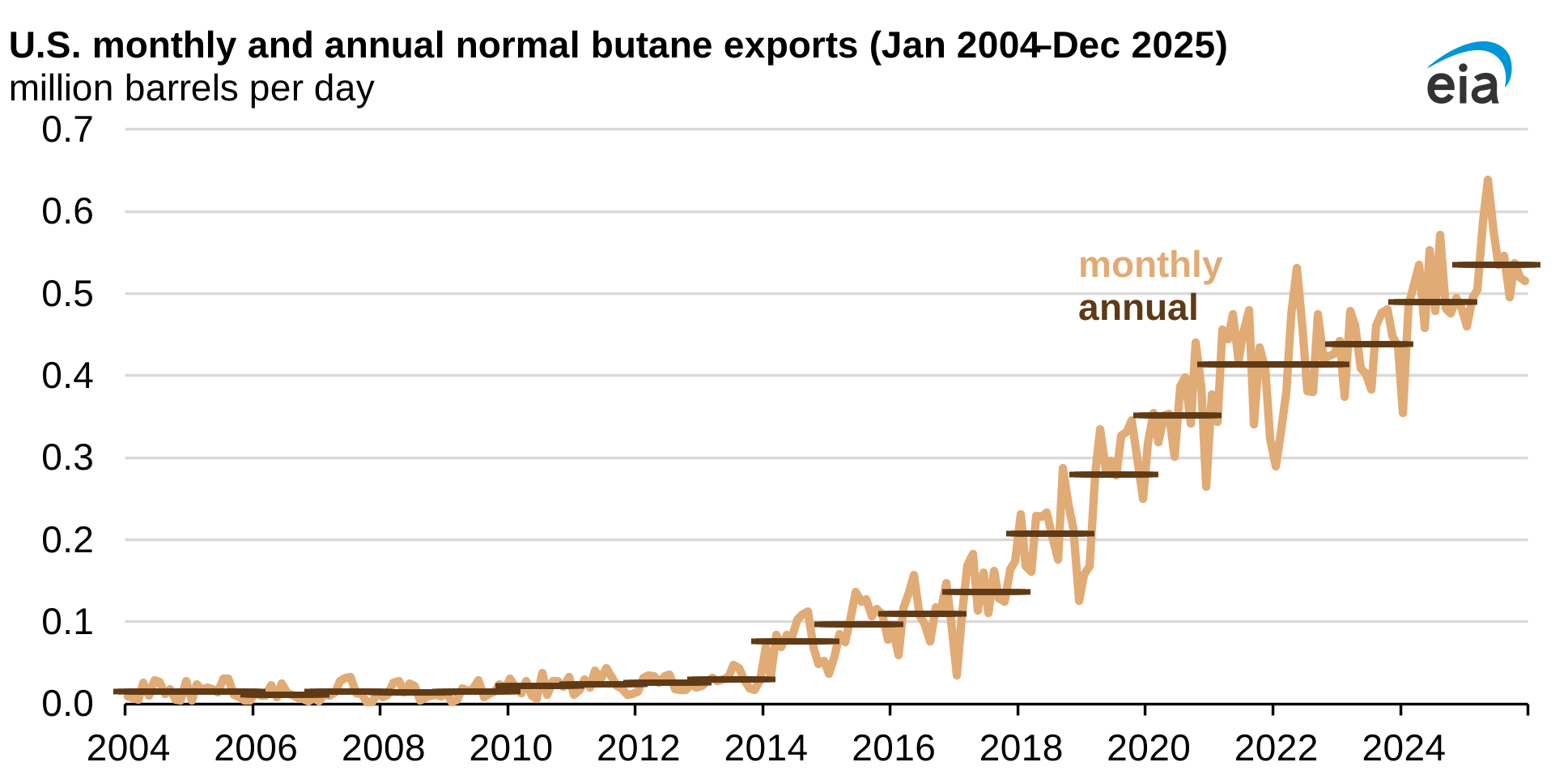
U.S. normal butane exports have increased every year since 2006, reaching a record-high average of nearly 535,000 b/d in 2025, a 9% increase from the previous year. Butane is used as a cooking fuel, a petrochemical feedstock, and a gasoline blendstock during the winter. Butane can also be converted to isobutane through isomerization, producing high-octane gasoline components. The United States exports a small amount of isobutane. Generally, butane demand has grown along with petrochemical demand. However, in many developing markets, governments have subsidized butane as a cleaner-burning replacement for other fuels (for example, wood or charcoal) for uses such as cooking or heating.
U.S. butane exports increased despite a 6% drop in exports to Morocco, the largest importer of U.S. butane at 65,000 b/d in 2025. Indonesia, the second-largest destination for U.S. butane increased by 11,000 b/d (22%). There was a significant rise in U.S. exports to India, which increased to 36,000 b/d in 2025, a 34,000 b/d increase from the previous year. The major other countries that import U.S. butane were Japan, South Korea, and Egypt.
Although natural gasoline exports rose to 176,000 b/d (22%) in 2025, exports have been relatively stable after growing from 2007 through 2016, when they peaked at 202,000 b/d. Nearly all natural gasoline exports go to Canada by land, with insignificant amounts going to Mexico and Brazil.
Read more here.